
A Sample Maker is a specialized cutting and creasing machine used to produce prototypes, samples, and short‑run production of corrugated boxes, folding cartons, POP displays, and other packaging.
It allows packaging designers, sales teams, and converters to quickly create accurate samples for customer approval, structural testing, and pre‑production verification — without the need for full‑scale die‑making or long machine setups.
Common Types
Flatbed Digital Sample Makers
CNC controlled, versatile for corrugated, folding carton, foam, and plastics.
High Speed Digital Cutters
For short run production as well as sampling
Hybrid Sample Makers
Combine cutting, creasing, and digital printing for fully finished mock ups.
Drive System
Servo driven gantry for precise tool movement in X/Y (and sometimes Z) axes.
Laser Sample Makers
Use laser cutting for intricate designs (less common for corrugated due to edge charring).
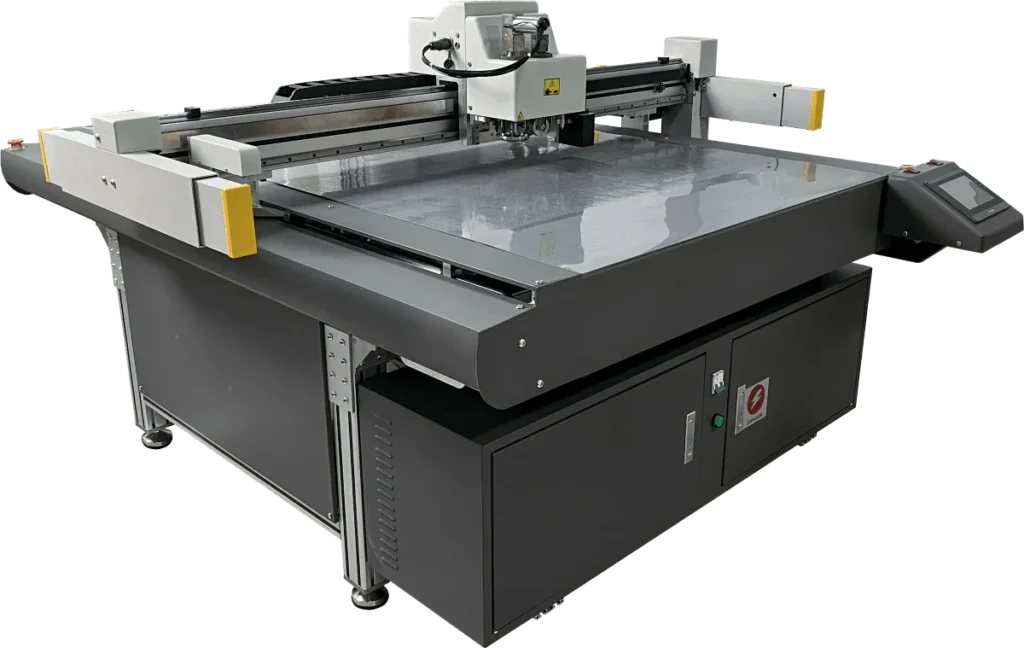
Construction Features
Modern sample makers are designed for precision, flexibility, and speed:- Cutting System – Oscillating knife, drag knife, V‑cut knife, or creasing wheel; some include milling heads for rigid materials.
- Creasing Tools – Wheel or rule systems to simulate production creases.
- Work Table – Flatbed vacuum table to hold sheets securely during cutting.
- Drive System – Servo‑driven gantry for precise tool movement in X/Y (and sometimes Z) axes.
- Tool Changer – Automatic or manual tool change for different operations.
- Control Software – CAD/CAM integration for importing box designs (e.g., from ArtiosCAD, Kasemake, Impact).
- Registration System – Cameras or sensors for print‑to‑cut alignment.
- Safety Features – Light curtains, emergency stops, and guarded moving parts.
Key Selection Factors
When choosing a sample maker:
- Material Range – Corrugated grades, folding carton, foam, plastics.
- Max Sheet Size – Must match your largest design (e.g., 1600×2500 mm).
- Tooling Options – Oscillating knife, creasing wheel, V‑cut, milling head.
- Cutting Accuracy – Tolerance needed for prototypes (±0.1–0.2 mm typical).
- Speed – Impacts throughput for multiple samples or short runs.
- Software Compatibility – Integration with your design workflow.
- Print‑to‑Cut Registration – For printed mock‑ups.
- Ease of Setup – Quick changeover between jobs.
- After‑Sales Support – Training, spare parts, and service availability.
Key Selection Factors
When choosing a sample maker:- Material Range – Corrugated grades, folding carton, foam, plastics.
- Max Sheet Size – Must match your largest design (e.g., 1600×2500 mm).
- Tooling Options – Oscillating knife, creasing wheel, V‑cut, milling head.
- Cutting Accuracy – Tolerance needed for prototypes (±0.1–0.2 mm typical).
- Speed – Impacts throughput for multiple samples or short runs.
- Software Compatibility – Integration with your design workflow.
- Print‑to‑Cut Registration – For printed mock‑ups.
- Ease of Setup – Quick changeover between jobs.
- After‑Sales Support – Training, spare parts, and service availability.
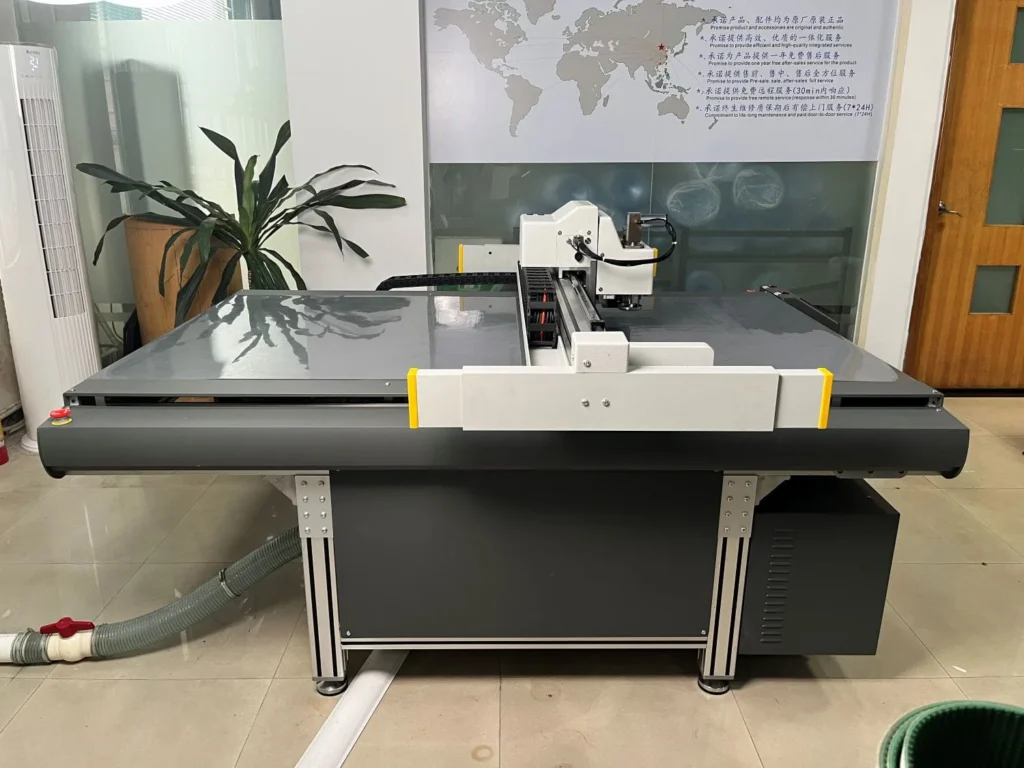
Maintenance & Care
- Daily Cleaning – Remove dust and debris from table, tools, and vacuum system.
- Blade & Tool Care – Replace or sharpen knives regularly; inspect creasing wheels for wear.
- Vacuum System Maintenance – Check filters and seals for proper sheet hold‑down.
- Software Updates – Keep control software and firmware current.
- Calibration – Periodically check tool alignment and cutting accuracy.
- Lubrication – Follow OEM guidelines for moving parts.
- Safety Checks – Test emergency stops and light curtains.
Latest Technology Trends
- Multi‑Tool Heads – Simultaneous cutting, creasing, and plotting without tool change.
- Automated Tool Changers – Reduce downtime between operations.
- High‑Resolution Vision Systems – For perfect print‑to‑cut registration.
- Integrated Digital Printing – Print and cut in one pass for realistic mock‑ups.
- IoT Connectivity – Remote diagnostics, usage tracking, and predictive maintenance.
- Energy‑Efficient Drives – Lower power consumption with regenerative braking.
- Advanced CAD Integration – Direct link from design to machine with minimal setup.
- Short‑Run Production Capability – Bridging the gap between sampling and small‑batch manufacturing.
Key Parameters to Order
Parameter | Why It Matters | Typical Range / Note |
Max Cutting Area | Determines max sheet size | e.g., 1600×2500 mm, 2100×3200 mm |
Material Thickness | Capability for corrugated grades | Up to 10–15 mm for triple wall |
Tool Types | Flexibility for designs | Oscillating knife, creasing wheel, V‑cut, milling |
Cutting Speed | Throughput | 500–1500 mm/s typical |
Accuracy | Prototype quality | ±0.1–0.2 mm |
Vacuum Hold‑Down | Sheet stability | Single or multi‑zone |
Software Interface | Workflow integration | CAD/CAM compatibility |
Registration System | Print alignment | Camera or sensor‑based |
Power Requirements | Installation planning | 220–400 V, 3‑phase |
Safety Features | Compliance | CE/OSHA standards |
Let’s build your next success Contact Us today.