Double Facer

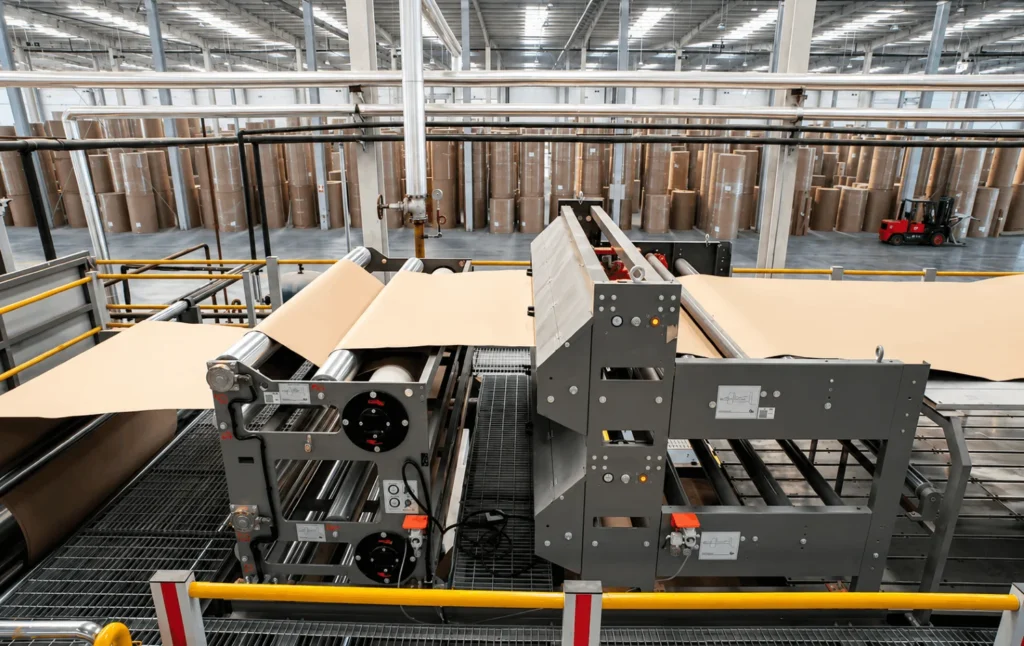
The Double backer (also called the double facer) is the section of a corrugator line where the single‑face web (fluted medium + one liner) is bonded to the outer liner to form single‑wall, double‑wall, or triple‑wall corrugated board.
It uses heat, adhesive, and pressure to cure the glue applied in the glue machine, ensuring a flat, well‑bonded, and dimensionally stable board.
It also transports the board through the hot plate section and into the dry end for slitting, scoring, and cutting.

Construction Features

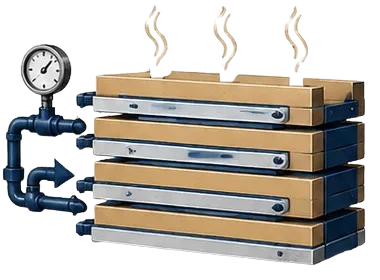
Hot Plate Section

Rows of steam heated plates that transfer heat to cure the adhesive.
Pressure System

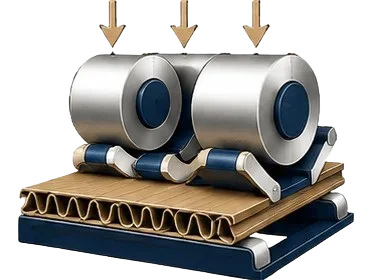
Pressure System

Ballast rolls, pressure shoes, or sandwich systems to press the board against the hot plates.
conveyor-belt

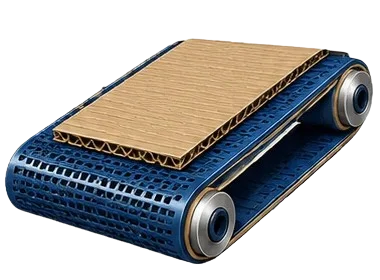
Conveyor Belt

Heat resistant, air permeable belt (corrugator belt) to hold the board flat and allow steam to escape.
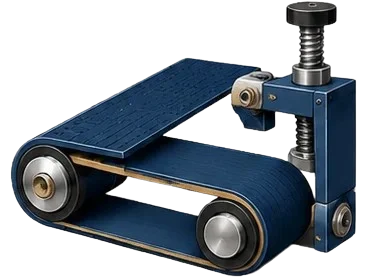
Belt Tracking & Tensioning System

Manual or automatic setting of the gap between applicator and doctor rolls for precise coating.
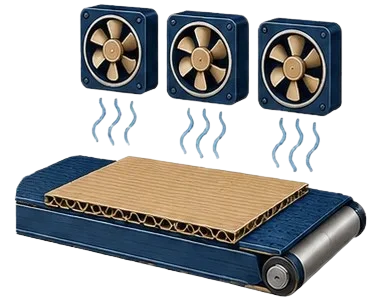
cooling-system

Cooling Section

Stabilizes the board after bonding.
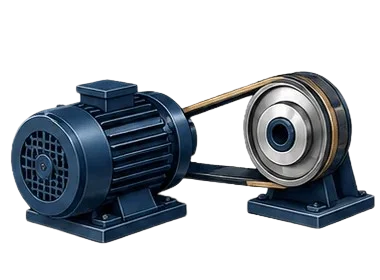
Drive System

Drive System

Synchronizes belt speed with upstream sections.
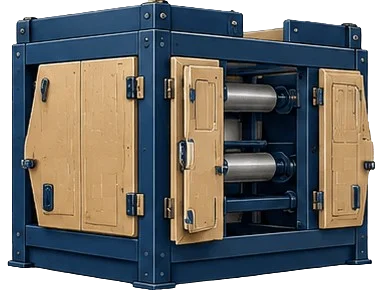
frame

Frame & Access Doors

Heavy duty frame with large access for cleaning and maintenance.
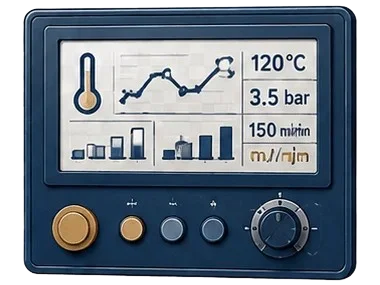
Control System

PLC/HMI for temperature, pressure, and speed control.
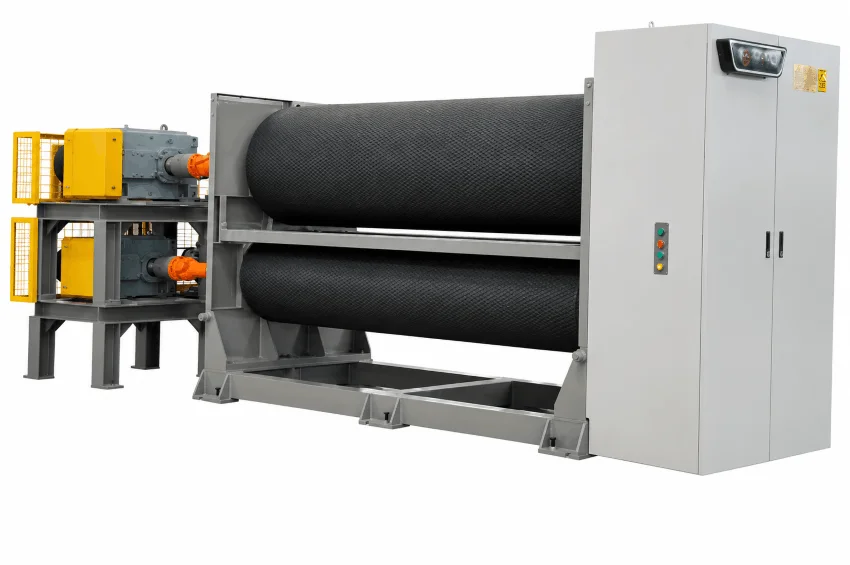
Common Types

  1. Ballast Roll Systems – Heavy rolls press the belt onto the board; simple but less adaptable to edge caliper loss.
  2. Pressure Shoe Systems – Continuous shoe contact for uniform pressure; better heat transfer.
  3. Sandwich Systems – Belt runs between upper and lower pressure elements for maximum control.
  4. Hybrid Systems – Combine rolls and shoes for optimal heat and pressure distribution.
  5. Short Double Facers – Compact design for quick grade changes and reduced waste
  6.  

Key Selection Factors

When specifying or upgrading a double facer:
  • Board Grades & Flute Types – Heavy double/triple wall needs higher pressure and heat capacity.
  • Production Speed – High‑speed lines (>350 m/min) require advanced belt, pressure, and heat systems.
  • Heating Capacity – Number and size of hot plates, steam pressure, and temperature control.
  • Pressure System Type – Roll, shoe, or hybrid based on product mix and quality requirements.
  • Belt Specification – Heat resistance, air permeability, thickness, and tracking stability.
  • Warp Control – Ability to adjust heat and moisture to prevent warp.
  • Automation Level – Servo‑controlled pressure, automatic belt tracking, recipe storage.
  • Maintenance Access – Easy cleaning of plates, belt, and glue areas.
  • Energy Efficiency – Insulation, heat recovery, and optimized steam usage.

Key Selection Factors

When specifying or upgrading a double facer:
  • Board Grades & Flute Types – Heavy double/triple wall needs higher pressure and heat capacity.
  • Production Speed – High‑speed lines (>350 m/min) require advanced belt, pressure, and heat systems.
  • Heating Capacity – Number and size of hot plates, steam pressure, and temperature control.
  • Pressure System Type – Roll, shoe, or hybrid based on product mix and quality requirements.
  • Belt Specification – Heat resistance, air permeability, thickness, and tracking stability.
  • Warp Control – Ability to adjust heat and moisture to prevent warp.
  • Automation Level – Servo‑controlled pressure, automatic belt tracking, recipe storage.
  • Maintenance Access – Easy cleaning of plates, belt, and glue areas.
  • Energy Efficiency – Insulation, heat recovery, and optimized steam usage.
double facer

Maintenance & Care

  • Daily Cleaning – Remove starch build‑up from belt edges and hot plates.
  • Belt Care – Keep belt clean, check tension and tracking, rotate or flip periodically.
  • Hot Plate Maintenance – Inspect for flatness, clean surfaces, check steam traps.
  • Pressure System Checks – Inspect rolls, shoes, and bearings for wear.
  • Alignment – Ensure belt and board path are straight to avoid edge damage.
  • Lubrication – Follow OEM schedules for bearings and moving parts.
  • Temperature & Pressure Calibration – Maintain consistent curing conditions

Key Parameters to Order

Parameter Why It Matters Typical Range / Note
Machine Width Must match corrugator 1800–2800 mm
Max Speed Matches line capacity 150–400 m/min
Hot Plate Length Heat transfer capacity 20–40 m typical
Hot Plate Size & Number Heating efficiency OEM‑specific
Pressure System Type Bond quality & warp control Roll, shoe, hybrid
Belt Type Heat resistance & stability Aramid/polyester blend, 6–10 mm thick
Belt Air Permeability Steam escape Measured in CFM or L/m²/s
Heating Source Energy & control Steam, oil, or electric
Cooling Section Length Board stabilization 3–6 m typical
Automation Features Efficiency & quality Servo controls, recipe storage

Latest Technology Trends

  • Hybrid Pressure Systems – Combining rolls and shoes for optimal heat transfer and uniform bonding.
  • Advanced Belt Materials – Higher wear resistance, better drying performance, and improved board flatness.
  • Servo‑Controlled Pressure & Heat Zones – Automatic adjustment for different grades and speeds.
  • Integrated Warp Control – Sensors and software adjust heat/moisture in real time.
  • Quick Grade Change Designs – Short double facers with reduced waste during order changes.
  • Energy Efficiency Upgrades – Insulated hot plates, optimized steam traps, and heat recovery.
  • Machine Control Centers (MCC) – Centralized monitoring, diagnostics, and maintenance scheduling.
  • Self‑Cleaning Hot Plates – Height‑adjustable loading systems and large access doors for easier cleaning.
 

Let’s build your next success  Contact Us  today.