
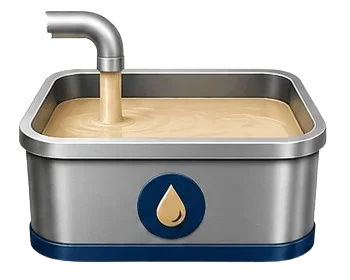
In a corrugator line, the Glue Machine is the section that applies adhesive to the flute tips of the corrugated medium before bonding it to the liner in the double backer (or in the single facer for single‑face board).
Its purpose is to deliver a precise, even film of starch‑based adhesive across the working width, ensuring strong bonds, minimal glue waste, and consistent board quality.
Construction Features

Glue Pan/Tub
Holds starch adhesive; often stainless steel for corrosion resistance
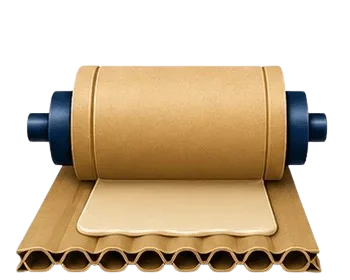
Applicator Roll(s)
Picks up adhesive from the pan and transfers it to flute tips.
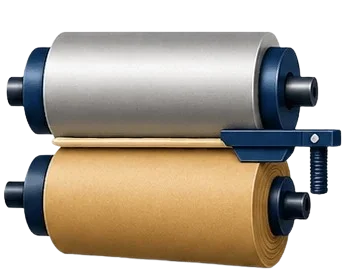
Doctor Roll
Controls adhesive film thickness on the applicator roll
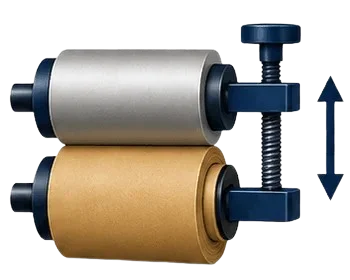
Glue Gap Adjustment
Manual or automatic setting of the gap between applicator and doctor rolls for precise coating.
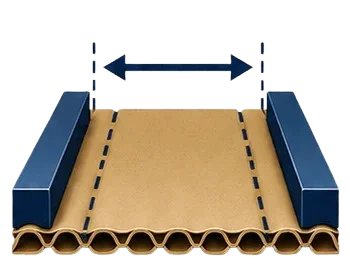
Glue Dams
Adjustable barriers to prevent glue from being applied outside the sheet width.
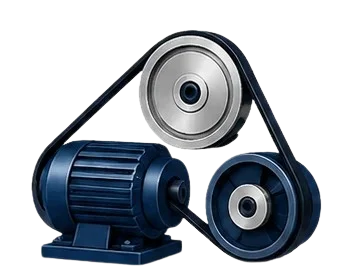
Drive System
Direct or belt drive for applicator rolls, often with independent speed control.
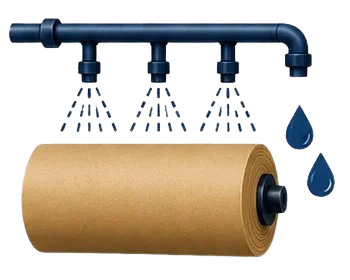
Cleaning System
Integrated wash up for quick changeovers and reduced downtime.
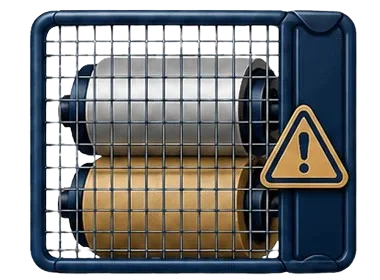
Safety Guards
Protect operators from moving parts and hot surfaces

Control Panel
Manual or PLC based, sometimes integrated into the corrugator’s main control system.
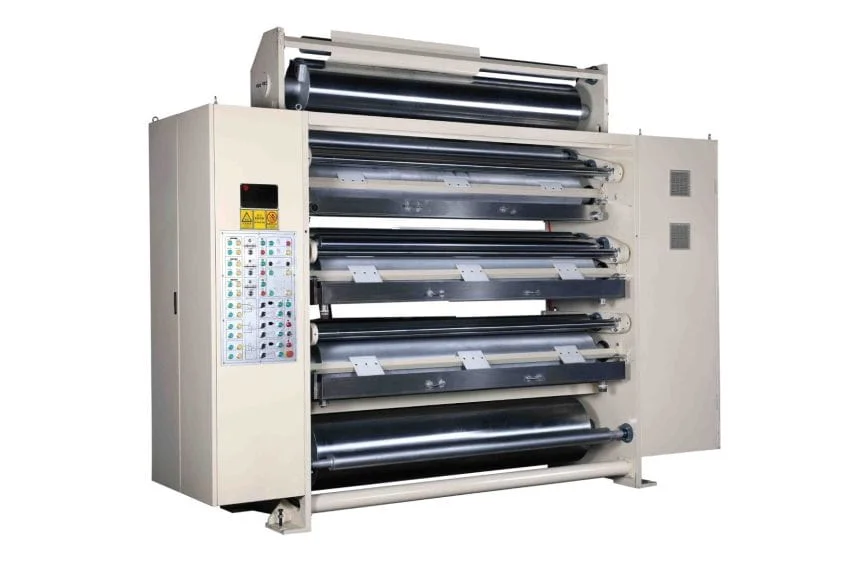
Common Types
- Single Applicator Roll Units – Simple design for standard speeds.
- Dual Applicator Roll Units – For higher speeds and better glue transfer control.
- Fingerless Glue Units – For vacuum transfer single facers; no fingers to guide the web.
- Automatic Glue Gap Units – Servo‑controlled for consistent application at all speeds.
- Segmented Glue Units – Independent glue application zones for multi‑width production.
Key Selection Factors
When specifying or upgrading a glue machine:- Production Speed – Higher speeds require more precise glue gap control and stable roll drives.
- Paper Grades – Heavier or recycled liners may need more adhesive; lightweight grades require minimal glue to avoid warp.
- Flute Profiles – Fine flutes (E, F) need very precise glue film control.
- Glue Type – Starch formulation, viscosity, and solids content affect roll and gap design.
- Automation Level – Manual vs. servo‑controlled adjustments.
- Width & Format Changes – Frequency of order changes may justify automatic glue dam adjustment.
- Cleaning Requirements – Quick wash‑up systems reduce downtime.
- Integration – Compatibility with upstream single facer and downstream double backer.
Key Selection Factors
When specifying or upgrading a glue machine:- Production Speed – Higher speeds require more precise glue gap control and stable roll drives.
- Paper Grades – Heavier or recycled liners may need more adhesive; lightweight grades require minimal glue to avoid warp.
- Flute Profiles – Fine flutes (E, F) need very precise glue film control.
- Glue Type – Starch formulation, viscosity, and solids content affect roll and gap design.
- Automation Level – Manual vs. servo‑controlled adjustments.
- Width & Format Changes – Frequency of order changes may justify automatic glue dam adjustment.
- Cleaning Requirements – Quick wash‑up systems reduce downtime.
- Integration – Compatibility with upstream single facer and downstream double backer.
Maintenance & Care
- Daily Cleaning – Remove dried starch from rolls, pans, and dams.
- Check Glue Gap – Calibrate regularly for even application.
- Inspect Rolls – Look for wear, scoring, or buildup; regrind or replace as needed.
- Monitor Bearings & Drives – Lubricate per OEM schedule.
- Check Glue Dams – Ensure correct position to avoid contamination of hot plates.
- Flush System – Use warm water or approved cleaners at shift end to prevent clogging.
- Inspect Safety Guards – Keep in place and functional.
Key Parameters to Order
| Parameter | Why It Matters | Typical Range / Note |
|---|---|---|
| Machine Width | Must match corrugator | e.g., 1800–2800 mm |
| Max Speed | Matches line capacity | 150–400 m/min |
| Applicator Roll Diameter | Affects glue transfer | 200–300 mm typical |
| Roll Surface | Wear & glue release | Chrome‑plated, ceramic‑coated |
| Glue Gap Range | Film thickness control | 0.1–0.5 mm typical |
| Glue Dam Type | Prevents edge contamination | Manual or automatic |
| Drive Type | Precision & maintenance | Direct, belt, or servo drive |
| Cleaning System | Downtime reduction | Manual, semi‑auto, or auto wash‑up |
| Material | Corrosion resistance | Stainless steel tub & guards |
| Control System | Ease of adjustment | Manual, PLC, HMI touch panel |
Latest Technology Trends
- Automatic Glue Gap Control – Servo‑driven adjustments linked to production speed and flute type.
- Edge Detection & Auto Glue Dams – Sensors adjust glue width automatically to sheet width, preventing hot plate contamination.
- Independent Roll Drives – Allow fine‑tuning of glue film thickness for each flute profile.
- Integrated Glue Level Sensors – Maintain optimal adhesive volume in the pan.
- Quick‑Change Applicator Rolls – Reduce downtime for cleaning or flute changes.
- Low‑Glue Consumption Designs – Apply “as little as possible, as much as necessary” for bond strength.
- Stainless Steel & Non‑Stick Coatings – Improve hygiene and reduce buildup.
- IoT Monitoring – Real‑time viscosity, temperature, and consumption tracking for predictive maintenance.
Let’s build your next success Contact Us today.